
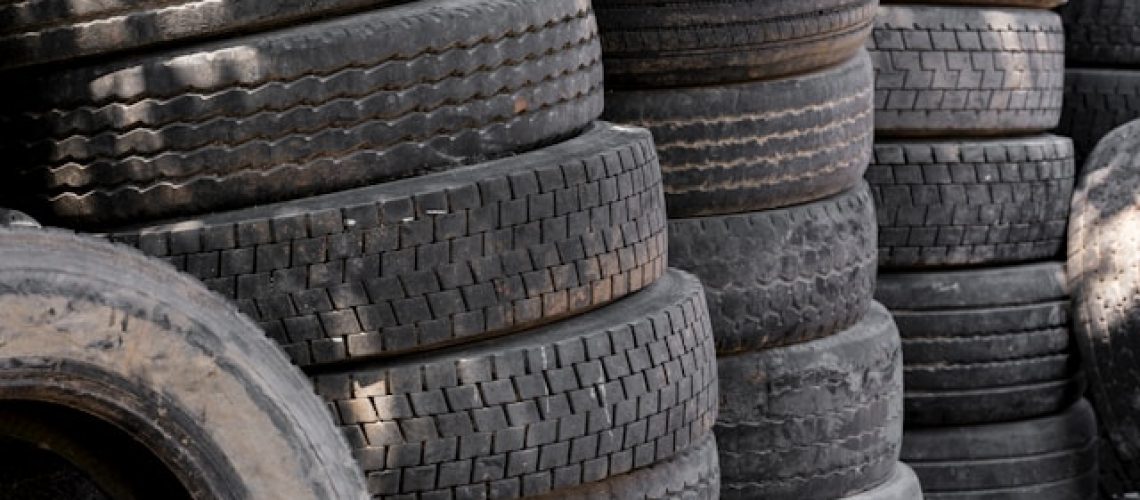
With over 20 million registered vehicles in Australia, the vast majority (around 74%) are passenger vehicles and freight vehicles are the mainstay of the national logistics network. The tyre retailer and supplier sells to both the individual commuter and the fleet operator, but the way they do it, the drivers for their decisions, and what they anticipate from the purchase differ almost entirely. It is important to know the difference if you want to serve both segments or need to do business like tyre sales Perth without considering them to be a variation of the same customer.
Volume Transforms A Maintenance Decision Into A Procurement Exercise
Each driver replaces four tyres every three to five years, but a fleet operator manages dozens, hundreds, or thousands of vehicles simultaneously, and the economics at that scale are simply different. A heavy articulated truck may use 14 to 22 tyres; a B-double combination may have 34 tyres. According to Australian transport cost data, the cost of replacing a full set of tyres for a B-double can be more than AUD 20,000. At that cost, buying tyres is not a maintenance decision made by one person in the afternoon; it is a strategic procurement exercise led by finance teams, operations managers, and supplier relationships managed over years.
That volume difference ripples through every other part of the buying journey: Pricing, service expectations, performance evaluation, and supplier selection all change when the decision involves thousands of units versus four. If a tyre retailer approaches a fleet manager with the same conversation it would have with a passenger vehicle customer, it is misreading the situation completely and the fleet manager knows it. These two buying journeys diverge at the volume point and never converge again downstream.
Price Sensitivity Means Completely Different Things To Each Group
Because tyre replacement is relatively infrequent, individual drivers are concerned about the up-front purchase price, and research on vehicle operating costs shows that a typical passenger vehicle tyre set costs around AUD 492 (see Figure 7.2), so affordability and visible discounting can be important drivers of the decision. In Perth, and across Australian markets, individual consumers compare the price difference between brands at the time of purchase, often choosing based on a few dollars per tyre. The decision horizon is at the time of purchase, and the value calculation is straightforward.
Fleet operators look at value across the operational life of the tyre; a product that has a 15% higher purchase price but 25% longer tread life will result in net savings across a large fleet that will far outweigh the initial price difference, so fleet managers ask for wear-rate data, fuel efficiency performance reports, and re-treading potential assessments, rather than promotional pricing. In the fleet segment, the metric that dictates fleet tyre procurement is cost per kilometre, and a supplier who cannot articulate cost per kilometre with evidence is simply not a contender, no matter how good their retail pricing looks.
What Performance Means Is Entirely Different For Each Buyer?
Safety, wet-weather handling, ride comfort, and brand reputation are key factors for individual drivers. Australian vehicles are more than a decade old on average, and owners want to gain confidence in daily driving without increasing what they spend. Online reviews, retailer recommendations, and the immediate experience of driving on new rubber all factor into the consumer decision, and performance is subjective and personal, meaning that the same tyre can earn glowing reviews from private drivers and be ignored by fleet buyers with criteria that bear no resemblance to those.
Fleet operators look at performance in terms of business outcomes. For example, the freight sector in Australia carries over 223 billion tonne-kilometres per year, and a 2 per cent increase in tread life for a large commercial fleet can mean thousands of dollars saved per year in replacement costs. All of these factors, including downtime risk, retreading suitability, and fuel consumption, go into a procurement decision that is documented, benchmarked across suppliers, and analysed against prior purchase data, while the subjective comfort assessment that guides a private buyer is not part of that equation.

Service And Data Expectations Finish The Separation
For individual drivers, there is an expectation of fitting, balancing, alignment checks, and warranty support, and the speed and convenience matter because the vehicle is their personal transport and any downtime is an inconvenience; for fleet operators, it is an entirely different service ecosystem, requiring mobile fitting, emergency roadside support, scheduled inspections, and tyre pressure monitoring programmes. In industries where vehicles are working 24 hours a day, unscheduled downtime can result in revenue losses many times the cost of the tyres, and commercial tyre suppliers compete on service responsiveness and nationwide support networks as much as they compete on product quality.
This gap is being further widened by digitalisation. While individual drivers may use price comparison platforms and online reviews, the ultimate decision is often based on retailer recommendations and personal experience. But as transport operators contend with tighter margins and increased operating costs, procurement decisions are becoming more data-driven and less relationship-based, and reward suppliers who can provide performance data as easily as they provide tyres.