
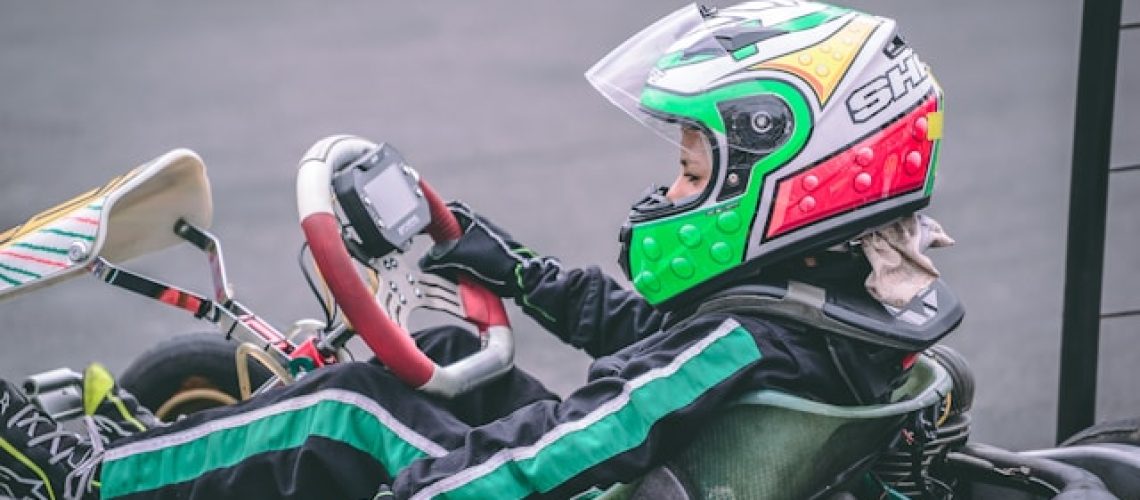
Every helmet used in Australian karting has to meet the minimum set by AS1698. And not only that, it’s got to be within 10 years of when it was manufactured, not when it was bought. So just because a helmet was purchased 2 years ago doesn’t mean it’s still good to go. If it was made 8 years before that, you’ve only got 2 years of compliance left, not 10.
That’s the baseline but competitive karting tightens things up even more, depending on the licence level and the type of event you’re doing. Young drivers under 15 need a helmet that’s been certified to CMR standards. And if you’re racing at a national or international level then CIKFIA homologation is the minimum you need. And just to be clear, a motorbike helmet no matter how good or cheap just doesn’t cut it.
These rules exist because karting exposes the driver to a risk profile that’s very different from general motorsport helmets, and ignoring them is not a shortcut, it’s the opposite: it’s an automatic exclusion from competition and more importantly a genuine safety risk. Helmets for karting are designed to meet these specific safety requirements rather than the standards used for other forms of motorsport.
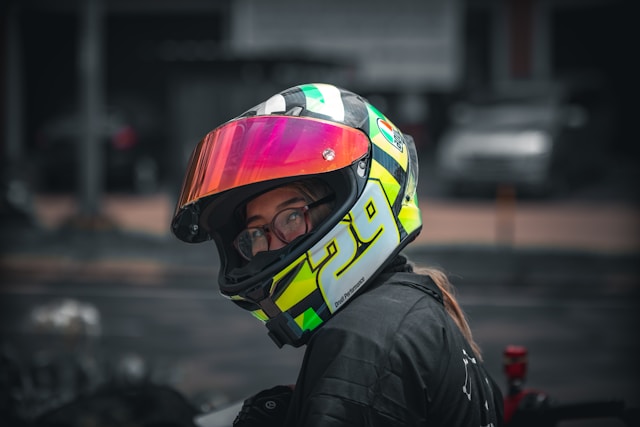
What CMR and CIK-FIA Actually Mean?
CMR is the certification for helmets specifically designed for young kart drivers. These are built to a different standard, with lighter construction, designed for smaller necks, and testing that takes into account the fact that kids have a higher head-to-body weight ratio. Senndit has a good rundown on what’s what, but essentially CMR is not a junior version of a CIK helmet; it’s a different product with a different set of design goals.
CIKFIA on the other hand covers adult competition at a national and international level. Buying a CMR-rated helmet for a grown-up competitive driver won’t cut it and buying a standard car helmet for a junior karter is a safety disaster that the certification system exists to stop. The mix-up between these categories is a common problem, especially for new families getting into competitive karting who buy gear through general sporting goods shops. A retailer that doesn’t have expertise in karting is unlikely to pick up these errors before you buy.
The Major Brands Australian Karters Are Buying
Arai, Bell, OMP and Sparco are the big 4 in the Australian kart helmet market. Bell’s KC7CMR range has been the benchmark for youth helmets for ages and Arai has a reputation built on years of experience in international single-seater racing. IKD International Karting Distributors is one of the country’s biggest specialist suppliers, they stock Arai, OMP and Sparco along with Alpinestars gear.
Getting the Fit Right and What to Check
Slapping a karting helmet on your head is not exactly a piece of cake, it needs some serious effort to get it on right. When it’s on, you should have to push it firmly down over your ears for it to sit nicely. And when it’s all secure, it should be level, no tilting forward or backward and not wobble around when you shake your head with the chin strap undone. The cheek pads on helmets do tend to compress over time, which explains why you might feel like it’s a bit tight at the start. That’s often a good sign. A helmet that feels too comfy straight out of the box might not be doing its job properly after a season of regular use.
Price Ranges and Where to Buy in Australia
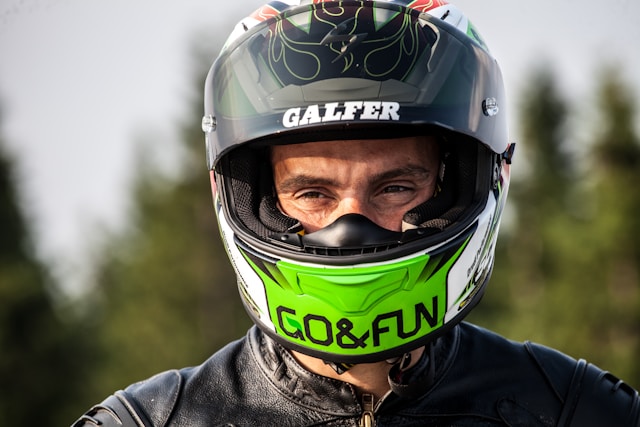
You can pick up a pretty basic full-face karting helmet for AU$199 from a specialist retailer. For something a bit midrange that’s also got CMR certification, you’re looking at a price of around $700$1,100. And then at the top end, you’ve got the CIKFIA helmets from brands like Bell and Arai, those can be pretty pricey, over $1,400 in some cases.