
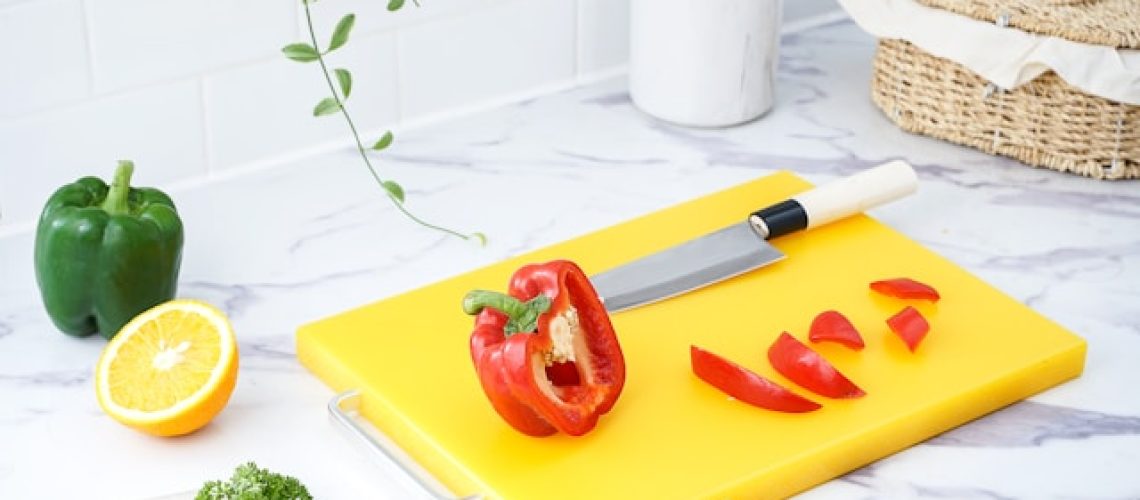
The debate over whether to use a wood or plastic chopping board has heated up online, but in the real world of commercial kitchens, the answer has been clear for decades: polymer boards, period. It is not enough to know the rules. Knowing why explains what really matters when it comes to a cutting surface. Most of what is said about wooden boards online is wrong.
The Food Safety Case for Plastic
Wood is porous. Each cut under a knife opens up slightly and allows moisture and whatever organic matter is present to enter those channels. Surface contamination can be removed by washing with hot water and detergent. Bacteria are not extracted from within the wood grain. A used wooden board is not the same object as the clean surface suggests. For this reason, most Australian state food safety authorities and government inspectors will not allow wooden boards in commercial food preparation premises.
It is not possible to consistently meet the standard. Glass fails because of knife damage, the risk of fragmentation, and the contamination hazard posed by the sharp shards that are inherent to a food environment. Both food-grade polypropylene and HDPE (high-density polyethylene) overcome these problems. Neither is porous, nor does it absorb moisture or the bacteria that accompany it, and both tolerate the high-temperature commercial dishwasher cycles that proper sanitisation requires. Those cycles run at far higher temperatures than what a home dishwasher can achieve. They would warp or crack materials that are not designed for them.
HDPE vs Polypropylene: The Two Materials Worth Understanding
HDPE is a food-grade plastic and is softer than polypropylene, which is kinder to knife edges. It is softer on the surface and absorbs the cutting impact rather than transmitting it back to the blade. Therefore, it is the preferred material where knives are working constantly, such as in butcheries and seafood processing operations. The downside is that HDPE scores more easily. It accumulates grooves more quickly in high-volume cutting environments.
Polypropylene is more chemically resistant and able to withstand a greater temperature range from -20°C to 105°C in autoclaved configurations. It is suitable for environments where the board may be exposed to chemical sanitiser immersion, steam, or autoclave sterilisation in addition to standard dishwasher cycles. Tomkin Australia supplies polypropylene HACCP Australia-certified for food contact surfaces as part of the Chef Inox range. Industrial Plastics in Brisbane manufactures custom HDPE boards to specific dimensions and thickness for operations with non-standard requirements.
What to Know About Coloured Boards and Food Safety?
Not all coloured plastic boards are interchangeable. HACCP Australia states explicitly that some pigments used to colour polymer materials are toxic and may leach into food under conditions of heat or chemical exposure. The colour system on the surface does not ensure the material beneath it is safe on a cheap imported board marketed in HACCP colours.
Boards that are certified by HACCP Australia or are labelled as using food-grade polymer with safe colourants bear the verification that cheaper options miss. This is not a small detail for a commercial operation. It is the distinction between a compliant food contact surface and a liability in plain sight. This is specifically covered in foodsafety.asn.au and in the published guidance from HACCP Australia. The dollar difference between a certified board and a cheaper alternative may be small. The risk difference is not.
When to Replace a Plastic Board?
The non-porous surface of plastic boards is the safety case. Once that surface is compromised by heavy knife scoring, the protection is lost. Bacteria will accumulate in channels that are physically protected from sanitiser contact by deep grooves. The same principle that makes a properly maintained board safe also makes a heavily scored one unsafe. Surface cleaning, even with correct commercial sanitiser at the correct concentration and contact time, will not sterilise a groove that is physically shielding bacteria from the chemical. The board must be replaced.
While it may seem extreme to replace boards on a monthly basis, in high-volume kitchens it is more practical to treat board replacement as a planned operational cost rather than a reaction to visible damage. In kitchens running multiple services a day, boards on the heaviest cutting stations are not unreasonable to replace on a monthly basis. Nisbets Australia and Alpha Catering Equipment both supply full HACCP colour sets at reasonable prices for operations of all sizes. Hospitality Connect supplies custom cutting boards for operations with specific size requirements.
What Home Cooks Can Take Away?
This is not overkill for the home kitchen. A food-grade polypropylene board that undergoes a complete dishwasher cycle following exposure to raw meat or poultry is much safer than a wooden board that undergoes the same cycle. The reason is not that the dishwasher fails the wood. The surface characteristics of the wood retain the risk that the polymer does not. Heavy scoring should indicate replacement. Use a separate board for raw poultry. These are the same principles that govern commercial compliance. The food safety risk is exactly the same, regardless of the scale of the kitchen.